


Why Asian investors should watch Rwanda closely
The numbers tell a clear story. Rwanda’s exports to China rose from US$28.7 million in 2021 to US$227 million in 2025, a gain of roughly 691%, according to bilateral trade data cited in September 2025 reporting. That trajectory signals a maturing two-way commercial relationship, not a one-directional capital transfer.
China now ranks among Rwanda’s three largest export markets. It is also Rwanda’s leading source of foreign direct investment, per the same trade figures. For Singapore and Hong Kong-based portfolio managers, this pattern mirrors earlier phases of Chinese industrial engagement in Southeast Asia — and rewards early-mover attention.
The breadth of Chinese corporate activity in Rwanda has expanded well beyond construction. Companies are now active across manufacturing, energy, agriculture, technology, transport, and services. That creates entry points for regional logistics providers and co-investors seeking African exposure through established Chinese counterparties.
What does the Chery EV plant mean for investors?
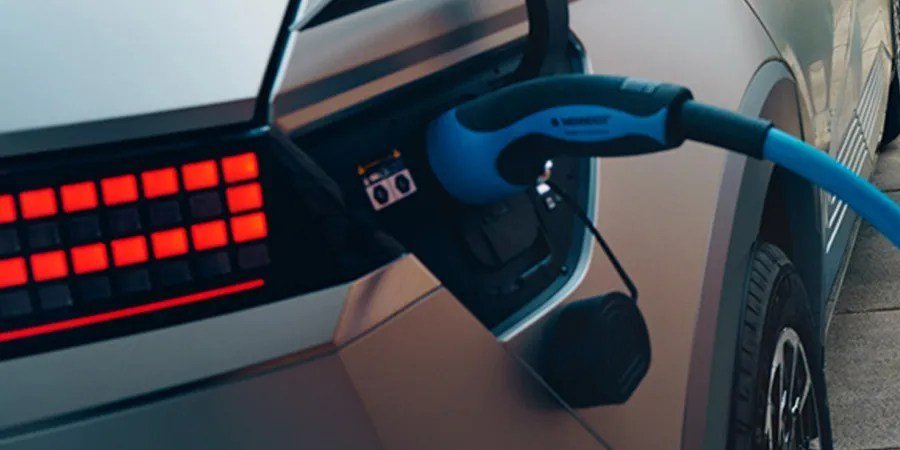
Rwanda’s Cabinet approved a strategic investment agreement with Chery Holding Rwanda Ltd on 18 September 2026. The agreement covers an electric-vehicle assembly plant. Project value, location, and production capacity had not been publicly disclosed at the time of approval.
The deal follows an April 2025 memorandum of understanding between the Rwanda Development Board and Chery Holding Group. That earlier agreement spanned electric mobility, green energy, agriculture, and mining. Cabinet approval moves the relationship from intent to committed policy.
The plant could generate demand across adjacent sectors. Logistics, charging infrastructure, maintenance services, and technical training all stand to benefit as assembly operations scale. Those downstream opportunities are where investors should look first.
A South-South EV model with BRI DNA
Rwanda’s industrial policy increasingly links manufacturing to energy transition goals. The Chery project positions the country as an early mover in African EV assembly, at a moment when regional demand for electric mobility is building. This mirrors the BRI-linked industrialisation model Chinese firms deployed in Laos, Ethiopia, and Cambodia over the past decade.
Asian investors familiar with BRI project structures will recognise the pattern: state-backed offtake agreements, government-to-government frameworks, and private Chinese corporates as the operational vehicle. The Rwanda variant adds a green-industry dimension that aligns with ESG mandates increasingly applied by Asian institutional allocators.
As one market intelligence analyst observed: Rwanda’s Chery deal is the clearest signal yet that Chinese OEMs are treating Africa as an EV manufacturing frontier, not merely an export market.
Transport infrastructure supports the industrial push
Rwanda and China launched the Prince House–Giporoso–Masaka road project on 8 September 2026. The corridor runs 10.3 kilometres through Kigali. Hunan Road and Bridge Construction Group Co., Ltd. is the contractor, according to China’s State Council Information Office.
The project is a China-aided addition to Kigali’s transport network. Better urban connectivity reduces delivery constraints and lowers last-mile logistics costs. It also raises the commercial value of land and services along the corridor.
Improved access to industrial zones strengthens the business case for the Chery plant and other manufacturing investments nearby. Transport and industrial policy are, in this instance, moving in deliberate alignment — a coordination pattern Asian development finance teams will find instructive when assessing replicability across other African markets.
Three signals for Asian allocators to track
The disclosure of Chery’s plant specifications and supplier commitments is the first key milestone. That data will clarify whether Asian component makers — particularly from South Korea and Japan — can position as tier-two suppliers. Second, the pace of road construction along the Masaka corridor will indicate implementation credibility. Third, Rwanda’s progress in converting Chinese capital into local procurement and skills transfer will determine the project’s long-term ESG and development-finance scoring. For further context on the bilateral relationship driving these projects, the original analysis is available via FurtherAfrica.
Quick answers
Rwanda’s exports to China surged from US$28.7 million in 2021 to US$227 million in 2025, a 691% increase per bilateral trade data, making China Rwanda’s top FDI source and one of its three largest export markets — a two-way dynamic that signals maturing commercial depth.
Rwanda’s Cabinet approved a strategic investment agreement with Chery Holding Rwanda Ltd on 18 September 2026 for an electric-vehicle assembly plant; adjacent opportunities in logistics, charging infrastructure, and technical training are expected to emerge as operations scale.
Once Chery discloses plant specifications and supplier commitments, South Korean and Japanese component manufacturers in particular may find viable tier-two supply positions, given their established roles in Chinese OEM global supply chains.


