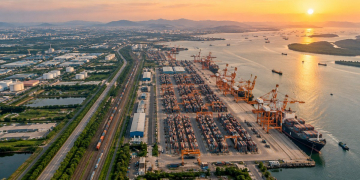
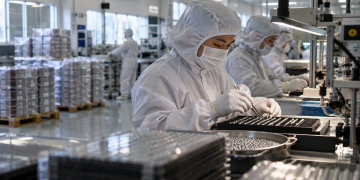
Coordinating Economic Affairs Minister Airlangga Hartarto confirmed that Nvidia has held discussions on deploying funds in Batam. The proposal, cited in an Indonesian government statement from October 2026, puts the figure at US$4.5B. No binding commitment has been signed. No construction timetable has been set.
Even so, the scale matters. Indonesia’s broader data-centre pipeline stands at approximately 1.3 GW, with an estimated investment value of US$15B–US$20B, according to government figures reported by Antara in October 2026. Operational capacity currently sits at 600–700 MW by the same measure. An Nvidia anchor would give that pipeline credibility with other global operators.
Why Batam matters to Indonesia’s AI strategy
Batam sits close to Singapore, one of Asia’s densest data-centre markets. Land costs are lower. Labour is available. The Indonesian government actively promotes the island as a digital infrastructure hub. Those advantages make it a logical candidate for large-scale AI workloads that need regional connectivity.
Indonesia’s government is building national computing capacity to support AI adoption across public services and industry. A confirmed Nvidia facility would accelerate that agenda. It would also attract suppliers, cloud operators and power developers to cluster around the site.
As FurtherAsia’s analysis of Indonesia’s digital finance gaps and ADB scrutiny shows, demand for digital infrastructure already outpaces current capacity in several segments. Batam could help close that gap, if delivery follows the proposal.
| Measure | Reported figure | Source and period |
|---|---|---|
| Proposed Nvidia investment | US$4.5B | Indonesian government statement, October 2026 |
| Operational data-centre capacity | 600–700 MW | Government figures, Antara, October 2026 |
| Pipeline capacity | 1.3 GW | Government figures, Antara, October 2026 |
| Pipeline investment value | US$15B–US$20B | Government estimate, Antara, October 2026 |
What does the deal mean for investors?
Data centres are heavy consumers of electricity and water. Both are binding constraints in Batam today. DBS Group has noted that regional data-centre expansion must address power and water intensity to remain viable at scale. Renewable-energy contracts, closed-loop cooling and recycled-water systems may become conditions of project approval.
Permitting presents a second risk. Environmental assessments and building approvals in Indonesia require early, structured engagement with regulators and local communities. Sponsors who move late on those processes tend to face delays that compress returns.
Financing will reflect both constraints. Lenders are increasingly tying project-finance terms to measurable resource and environmental standards. That creates openings for infrastructure providers with proven efficiency credentials.
Indonesia’s wider growth agenda, outlined in the country’s 8% growth plan and demographic targets, makes the Batam data-centre cluster a strategic priority. As Indonesia Business Post reported, Southeast Asian economies are competing hard to host AI infrastructure. In that race, a formal Nvidia commitment, secured power agreements and issued permits are the milestones investors should track next.
Quick answers
Nvidia has discussed a proposed investment of US$4.5B in AI, national-computing and data-centre infrastructure in Batam, according to an Indonesian government statement from October 2026. No binding agreement has been signed as of that date.
Indonesia’s operational data-centre capacity stood at approximately 600–700 MW in October 2026, per government figures reported by Antara. The development pipeline adds a further 1.3 GW, with an estimated investment value of US$15B–US$20B.
The primary risks are electricity supply, water availability for cooling systems, and the permitting process. Lenders are also applying stricter environmental and resource-efficiency standards to project-finance terms for large data-centre developments.