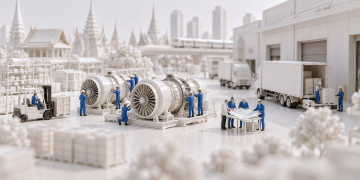
China is running a dual-track strategy: expand clean power at record pace while hardening energy reliability and exporting advanced manufacturing at scale.
The result is an industrial policy moment shaped by massive renewable build-out, a broader carbon market, and world-leading EV and battery exports. IEA data show China remains the engine of global renewables, with forecasts pointing to the country holding about half of the world’s cumulative renewable capacity by 2030, and contributing close to 60% of global annual additions near the end of the decade. That scale redefines the regional power mix and sets cost curves for solar, wind and storage across Asia.
Grids and reliability move to the foreground
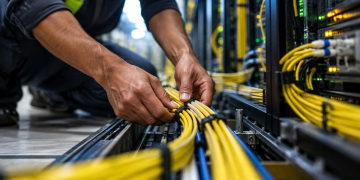
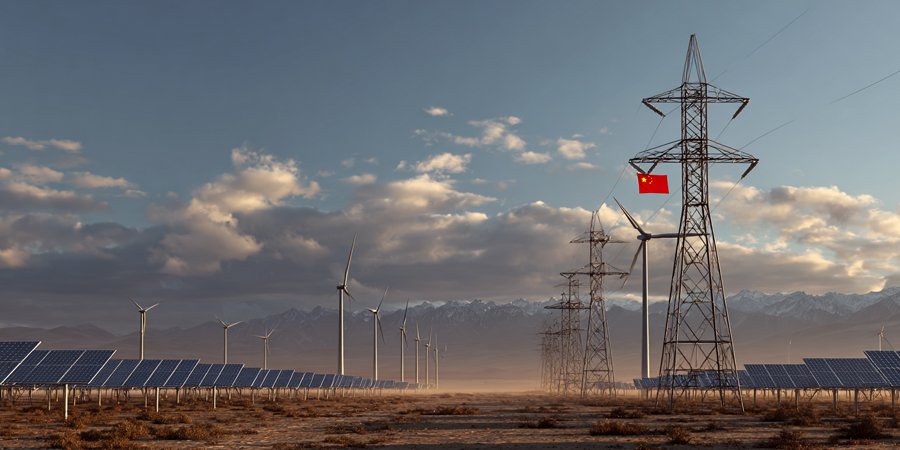
The build-out has outpaced grid capability, prompting an acceleration of ultra-high-voltage transmission projects to absorb remote wind and solar and cut curtailment. The National Energy Administration fast-tracked dozens of major lines, with analysts noting record network investment needs in 2025. The policy signal is clear: integrate variable renewables without sacrificing system stability.
Carbon market expansion reaches heavy industry
Beijing has widened its national emissions trading scheme beyond power to steel, cement and aluminium, lifting coverage to more than 60% of national CO₂ and bringing roughly 1,300–1,500 additional firms into compliance by end-2025. This marks the first industrial expansion of China’s ETS and tightens the policy link between energy use and industrial upgrading.
Clean-tech exports underpin manufacturing strategy
China’s EV market share and exports continue to climb. The IEA reports China accounted for the largest share of global EV exports in 2024, and domestic sales drove its share of global EV sales to nearly two-thirds; 2025 data point to continued export strength across Asia, the Middle East and Europe. This export engine sits alongside batteries, solar modules and grid gear, anchoring factory utilisation and upstream materials demand.
“New quality productive forces” guide industrial policy
Policy framing around “new quality productive forces” prioritises advanced manufacturing—EVs, batteries, next-gen materials, AI-enabled industry—and links it to productivity and resilience goals. State Council guidance in 2025 emphasised innovation-led growth and industrial transformation, tying energy system upgrades to competitiveness rather than subsidy-driven volume alone.